Must-See Exhibits at the Natural History Museum, London


Blogs
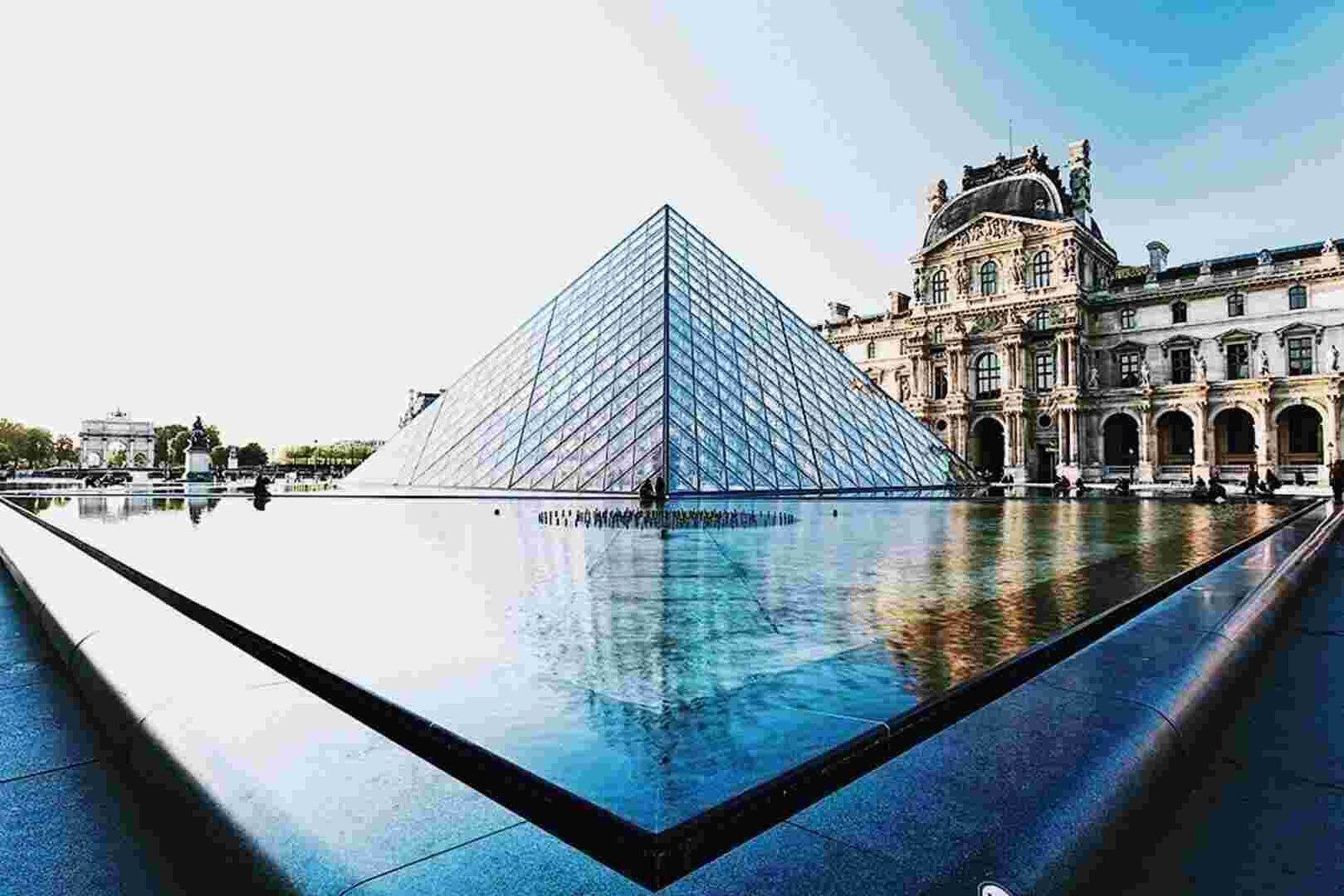
The Louvre isn't a museum you "see." It's one you survive — and then, if you've planned well, fall completely in love with. Before it was the most famous museum in France and the world, this was the fortress and palace of the kings of France, and that royal scale still shows: roughly 72,000 square metres on the right bank of the Seine, more than 35,000 works on display, and more visitors than any other museum on earth — well over eight million a year. Spend one minute in front of every object and you'd be here for around 200 years.
That scale is exactly why first-timers leave footsore and overwhelmed, convinced they "did" the Louvre when they really only fought the crowd around three paintings. This guide fixes that. Below are the timing, ticket, route, and on-the-ground tips for visiting the Louvre that our Paris guides actually use — so you spend your hours on the art, not the queue.
Picking the best time to visit the Louvre is the single highest-leverage decision you'll make. The museum opens 9 a.m. to 6 p.m. and closes every Tuesday without exception — a rule that catches thousands of visitors out each year and pushes Wednesday crowds higher. Seasonally, June through September is peak across Paris: hot, packed, and pricey. If your dates are flexible, the quiet stretch runs January to early April, when the galleries breathe. Either way, slot the museum into your itinerary early in the day — the Louvre rewards visitors who arrive before the crowds, not after.
Two windows beat all others. The first is opening: arrive for 9 a.m., ideally in line by 8:40, and you'll get 60 to 90 minutes before the day-trippers and tour buses land around 10:30. The second — and our guides' favourite — is the late-night opening on Wednesdays and Fridays, when the Louvre stays open until 9:00 p.m. After 6 p.m. visitor numbers fall by roughly 70% against midday, and after 7 p.m. you'll have the quietest galleries of the entire week, with softer light pouring through the glass — reviews of the late-night opening repeatedly mention how calm it feels. Midday, from 11 a.m. to 3 p.m., is the trap: that's when the line outside the Pyramid for guests without a ticket can stretch past two hours, and traveller reviews consistently flag it as the worst stretch of the day.
For the best days to visit the Louvre, target Monday or Thursday morning. Wednesday absorbs the overflow from the Tuesday closure, and weekends fill fast. The first Friday evening of most months brings free admission for everyone after 6 p.m. — a France-wide museum tradition that skips July and August — and entry is free for all on Bastille Day, France's national day on 14 July. Both are wonderful for the wallet and brutal for the crowds, so weigh the trade-off. Admission is always free for under-18s of any nationality and for European Economic Area residents under 26. Whatever day you choose, book a timed slot in advance — recent reviews are full of visitors who learned this the hard way; through summer 2026 the Louvre requires reservations for every visitor and free-entry guests still need to reserve a time.
Louvre museum tickets changed in January 2026, when the museum introduced dual pricing for the first time. A standard adult ticket is now €22 for EEA residents and €32 for everyone else, and it covers the entire permanent collection across all three wings and four floors. Major temporary exhibitions in the Hall Napoléon are usually ticketed separately. Buy directly from the official Louvre site or an authorised partner — the price is identical — and read recent reviews before trusting any third-party seller. "Discount" resellers charging €39–50 are simply bundling an audio guide or tour, not buying you faster entry.
Here's the detail most people miss: every standard ticket already includes a timed entry slot, so a basic ticket is the skip-the-line system. The real question is which entrance you use. The glass Pyramid is the famous entrance and the slowest; guided tour ticket holders move faster through the Passage Richelieu. Visitors not on a tour can enter faster via the underground Carrousel du Louvre entrance reached from Métro Line 1 and open from 7 a.m. This bypasses the outdoor queue almost entirely. In peak season a small-group or private booking is the most reliable shortcut, since reputable operators hold your entry time and walk you straight in; it's one reason their reviews so often mention how much waiting they avoided. If you change only one thing, enter through the Carrousel. Skim a few reviews of any tour or ticket before you buy, and check what the admission actually includes.
You will not see the whole Louvre and trying to is how visits go wrong. A focused itinerary beats a marathon every time. Start in the Denon Wing, which holds the highest density of famous works — and, yes, the densest crowds — so you hit it while you're fresh. From the Hall Napoléon, climb the Daru staircase to the Winged Victory of Samothrace, then continue to the Italian galleries for the Mona Lisa, doubling back for Géricault's Raft of the Medusa and the French Romantic painter Delacroix's Liberty Leading the People. Two hours, in this order, gives you the icons without the fatigue. Pick up a free paper map at the entrance or download the official app — even Parisians get lost inside the Louvre. A good Louvre guided tour walks this exact route for you, with the history that turns a checklist into a story.
Great Sphinx of Tanis — Meet one of the Louvre’s oldest icons, a colossal guardian radiating mystery and divine power.
Venus de Milo — Come face-to-face with an ancient ideal of beauty—and history’s most famous missing arms.
Winged Victory of Samothrace — Experience this breathtaking goddess soaring above the Louvre’s grandest staircase in a swirl of stone.
Botticelli, The Virgin and Child with the Young Saint John the Baptist — Discover Botticelli at his most graceful in this intimate, beautifully composed Renaissance masterpiece.
Leonardo da Vinci, Saint John the Baptist and The Virgin and Child with Saint Anne — See Leonardo’s genius beyond the Mona Lisa through two captivating and surprisingly intimate masterpieces.
Raphael, Portrait of Baldassare Castiglione — Meet the Renaissance’s ultimate gentleman in one of Raphael’s most compelling and psychologically brilliant portraits.
Caravaggio, The Death of the Virgin — Feel the shock of Caravaggio’s uncompromising realism in this powerful, deeply human portrayal of grief.
Leonardo da Vinci, Mona Lisa — Stand before the world’s most famous painting and discover why her expression still fascinates millions.
Jacques-Louis David, The Coronation of Napoleon — Step inside Napoleon’s spectacular coronation through David’s enormous, detail-packed vision of imperial ambition.
Eugène Delacroix, Liberty Leading the People — Feel the energy of revolution in Delacroix’s thrilling and instantly recognisable celebration of freedom.
Antonio Canova, Psyche Revived by Cupid’s Kiss — End with pure romance as Canova transforms cold marble into an unforgettable moment of awakening love.
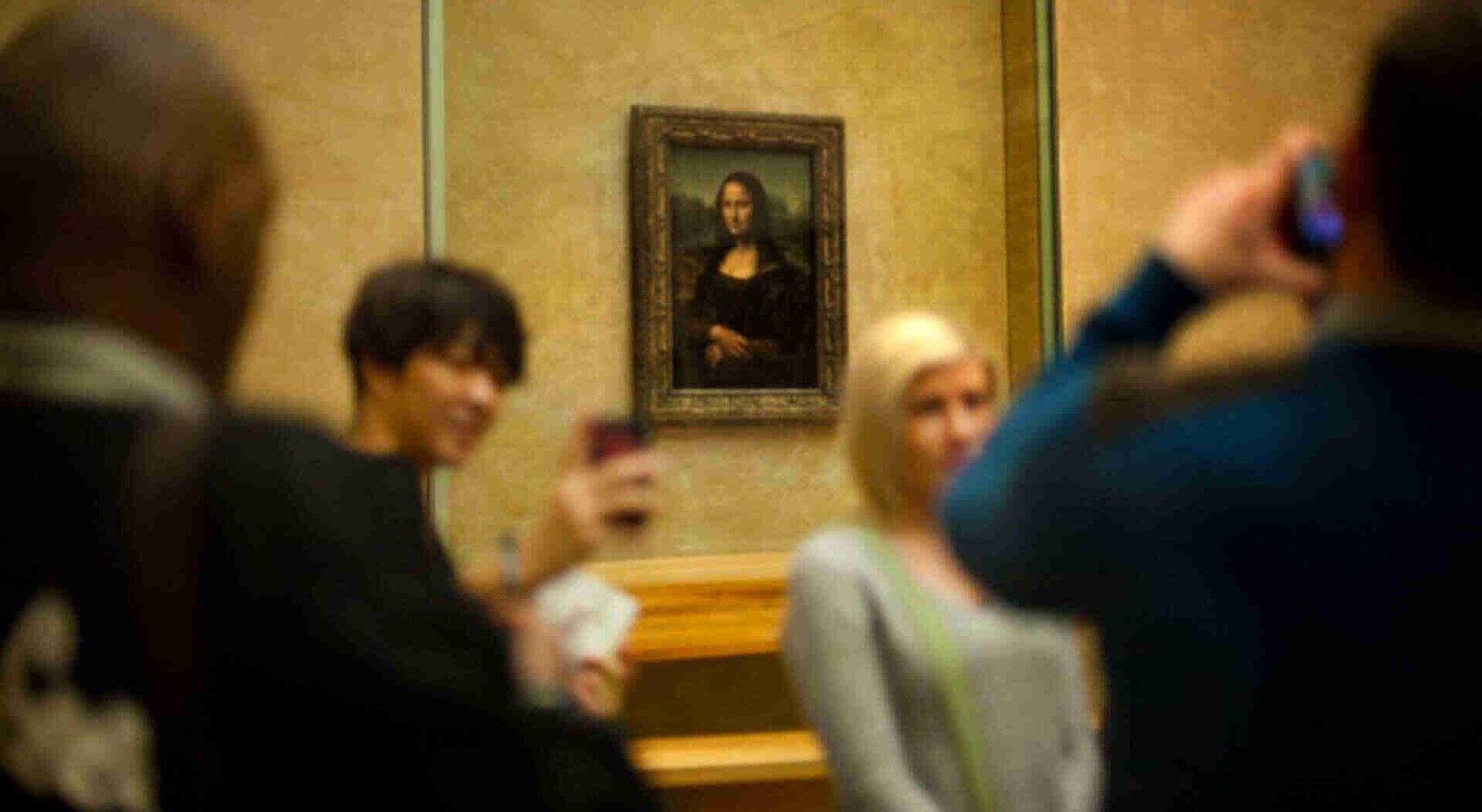
The Mona Lisa hangs in the Salle des États (Room 711), and she is smaller than almost everyone expects — just 77 by 53 centimetres behind glass, at the end of a room that funnels hundreds of phones toward one wall. The trick is timing, not elbows: come at opening or in the final hour before close, when the scrum thins dramatically. Approach from the right-hand side, where the line moves faster, take your look, then turn around. Directly behind the crowd hangs Veronese's vast Wedding Feast at Cana, the largest of all the Louvre's paintings — and almost nobody is looking at it.
Look for movement. Is the subject moving? Are they turning their head, walking, or standing still? Does the movement feel realistic? Movement is incredibly difficult to depict in a still artwork. Although artists have developed techniques for suggesting movement throughout the centuries, mastering them remains challenging—and some artists have excelled at it more than others in every period.
Look for perspective and three-dimensionality. The development of linear perspective and the vanishing point transformed Western painting—but this is not the only way artists create a sense of depth. Are objects in the background faded? Are the outlines around each object hard and distinct, or soft and diffused? Soft, blurred transitions can greatly enhance the three-dimensionality of a subject. This technique, known as sfumato, was famously perfected by Leonardo da Vinci.
Look for emotion. Is there emotion? Does it feel realistic or subtle? Many Classical Greek sculptures appear expressionless, and their idealised faces often resemble one another. The Romans greatly advanced portraiture, although emotion in their statues generally remained restrained. During the Renaissance, we begin to see more emotion emerge—but is it dramatic or recognisably human? In the Baroque, it is certainly dramatic.
Looking for these three elements can help you place a sculpture or painting within a particular period, location and style. They will also help you orient yourself in almost any museum around the world.
Walk five minutes past the Mona Lisa scrum and the Louvre empties out.
The Napoleon III Apartments are jaw-dropping and often nearly silent.
Nearby, the Venus de Milo anchors calm Greek galleries, while the Egyptian rooms — the Great Sphinx of Tanis, the Seated Scribe — reward anyone willing to wander.
Vermeer's quiet Lacemaker and the medieval foundations of the original fortress on the lower level are favourites our guests rarely expect. These are the rooms where you remember you're standing inside a former royal palace of France, not just a gallery of greatest hits — and where the best paintings often have no crowd at all. Many of these French masterpieces entered the collection after the French Revolution, when the royal holdings became the new museum's founding gift to the public, and the French crown's former state rooms are part of the spectacle.
A few practicalities separate a smooth visit from a stressful one. Security screening at the Louvre is airport-style, so travel light. There's no strict dress code — comfortable shoes matter far more, since you'll easily walk several kilometres of stone floors. And remember the one-way rule: once you leave the Louvre, your ticket is spent — any exit is final, with no re-entry on the same admission. Plan a single continuous visit rather than ducking out for lunch and hoping to return. Small Louvre travel tips like these prevent the most common day-ruiners.
Photography for personal use is allowed throughout the permanent collection, with two firm exceptions: no flash and no selfie sticks, both banned to protect the art and the people around you. Temporary exhibitions sometimes forbid photos entirely, so check the signage at each entrance. For better images, lean on the museum building itself — the glass Pyramid at dusk, the sweeping Daru staircase, and the late-evening light on late-night days all photograph beautifully without a single flash ruining the shot.
Cloakrooms and free lockers handle coats and small bags, but there's a size limit — roughly 55 × 35 × 20 cm — and no room for suitcases, so leave large luggage at your hotel. Benches and quieter galleries (the French sculpture courts are a good bet) give your feet a break, and the Louvre is fully wheelchair accessible, with free entry and a companion ticket for disabled visitors. Refill your water bottle, pace yourself, and treat the visit as a half-day rather than a sprint — these are the Louvre visitor tips — echoed across our guests' reviews — that keep energy high to the very last room.
You don't need to leave the Louvre for food, but timing inside the Louvre matters as much as it does for the art. Inside, cafés near the galleries and the Café Mollien, with its terrace above the Pyramid, are convenient, but busy from 12:30 to 2 p.m. — eat early or late to skip the rush. The Carrousel du Louvre's underground food hall offers faster, cheaper options without leaving the complex. Step outside and the arcades of the rue de Rivoli, the Tuileries Gardens, and the cafés near the Palais-Royal give you classic French café culture within a five-minute walk of the museum.
Put it together and the formula is simple: choose a Monday or Thursday morning or a Wednesday or Friday evening, book a timed slot in advance, enter through the Carrousel, and walk a short, deliberate itinerary instead of chasing everything. Check the official site's daily closed-room list before you go — galleries rotate in and out of maintenance — and download the museum map so you're not navigating blind. Done right, the Louvre stops being a survival exercise and becomes the highlight of a trip to France.
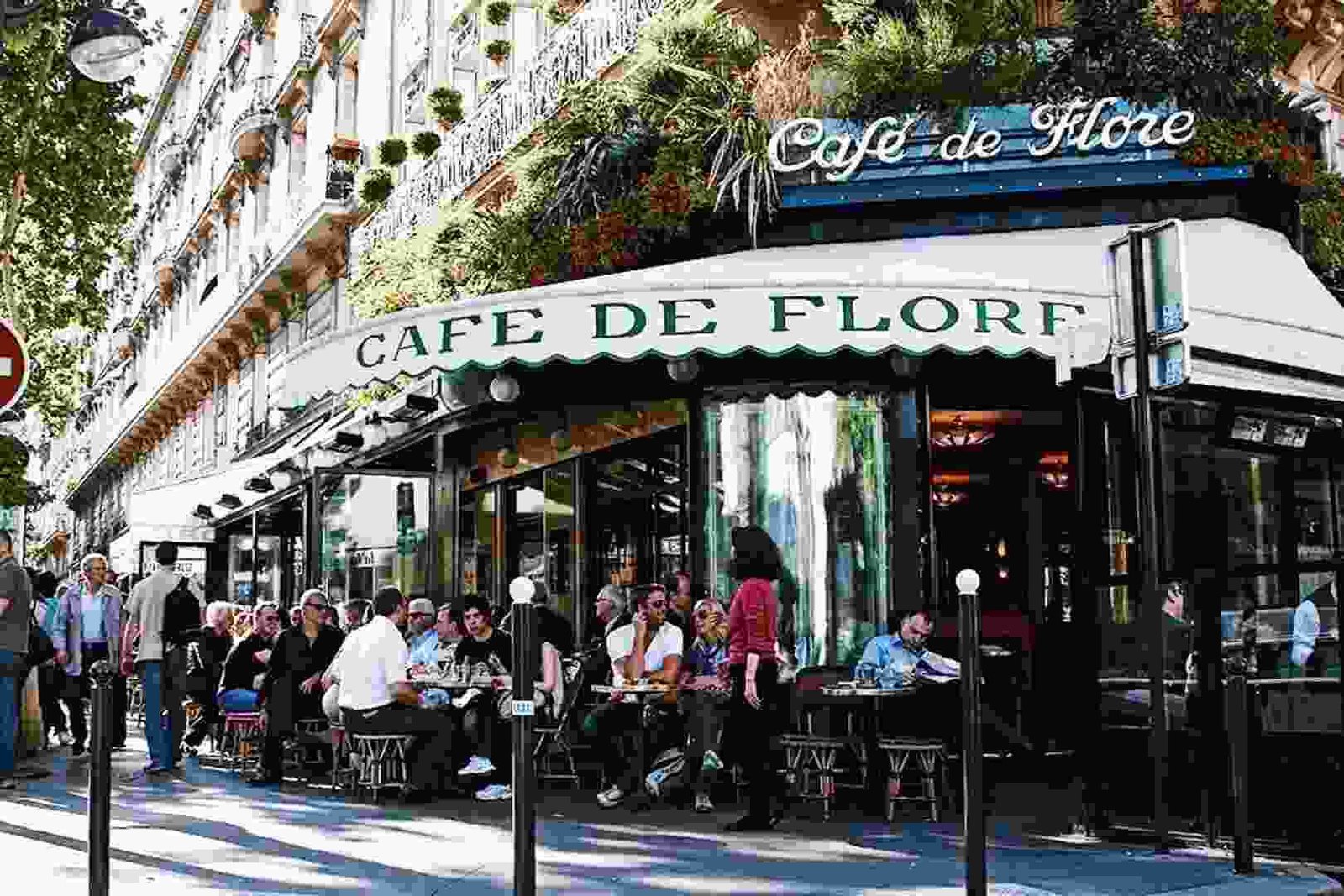
On Wednesdays or Fridays, start at Notre-Dame by 8:45 a.m., then cross Île de la Cité to Saint-Germain for coffee at Café de Flore. Head down Rue Bonparte, taking in the private galleries on your way to the Musée d’Orsay: visit the fifth-floor Impressionists, second-floor galleries and Rodin’s Gates of Hell. After lunch, explore Montmartre, pausing for photos from Sacré-Cœur. Enter the Louvre around 5 p.m.; follow Sully to Denon, photograph the Winged Victory from the Daru staircase, and save the Mona Lisa for last. On other days, visit the Louvre first and Notre-Dame immediately afterwards.
If you'd like the history and the route handled for you, our small-group Paris museum tours and our Paris city and Louvre tours put an expert guide beside you — the difference past guests' reviews mention most, alongside Babylon's 100% satisfaction guarantee. However you do it, these Louvre museum tips are built to give you back the one thing the Louvre is short on: time to actually look. One last reminder: your Louvre admission already includes the timed slot, so plan around the clock, not the queue, and let the museum be the highlight it should be.